


sequence TAYSP

What is Ujjayi Breath?
Skip to content 
Go to Top
The Yoga Shala Phuket
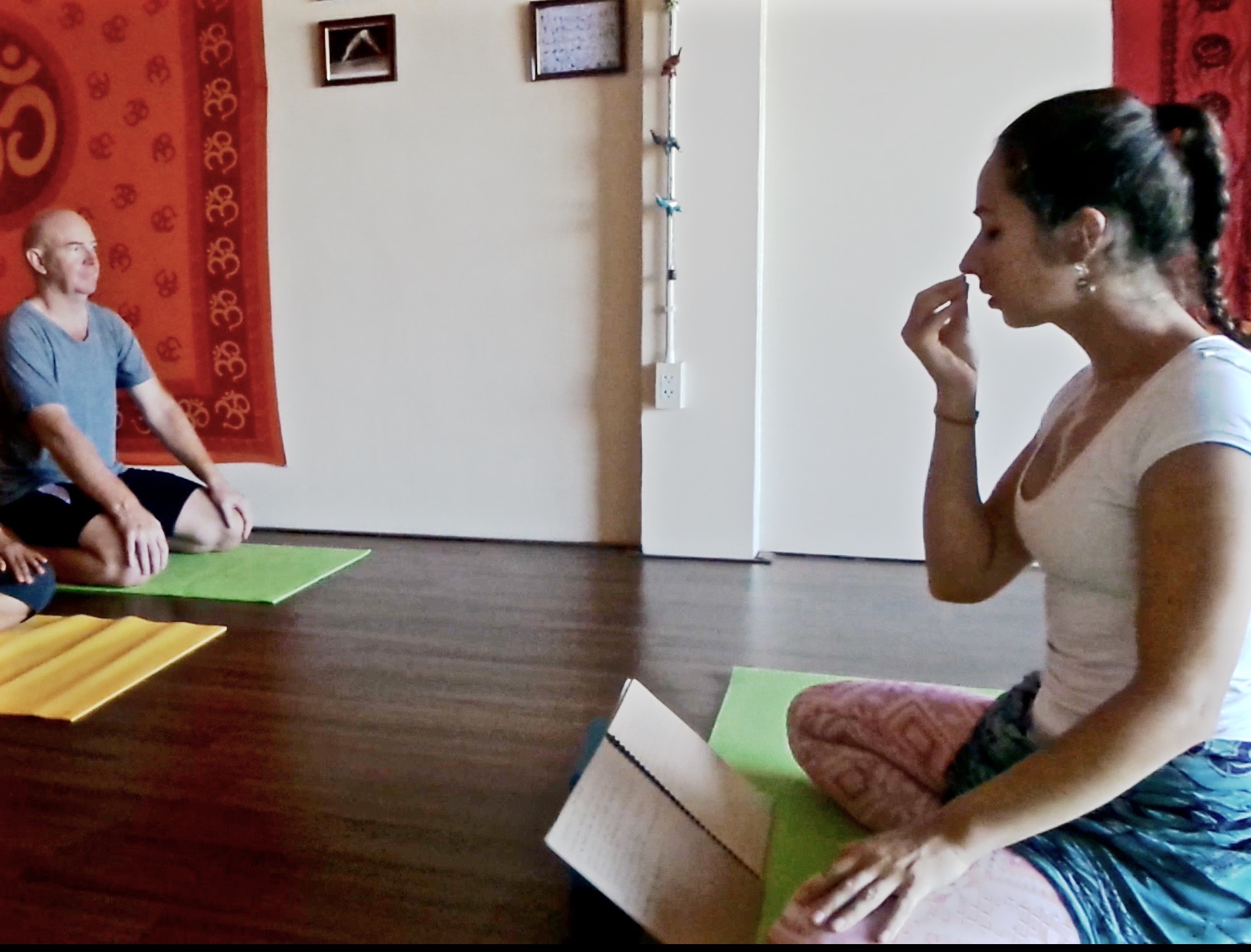
“Having closed the opening of the Nâdî (Larynx), the air should be drawn in such a way that it goes touching from the throat to the chest, and making noise while passing.”Hatha Yoga Pradipika 2:51
“Ud” is a prefix which means moving upward, “Jaya” means conquest, victory. Therefore, its usually translated as “Victorious”. Also Ujjayi method of breathing work in a way that lungs are expanded fully in all directions, hence the chest expands and moves upwards similarly to that of a victorious warrior.
Technically by slightly contracting the region at the back of the throat as we do when we swallow we are partially contracting the glottis which produces the snoring sound. The sound must come from the throat and not forced to come through the nose. This breath is often compared to the sound of the ocean. Make inhalation and exhalation through the nose only and make them long, deep and controlled.
Sri. T. Krishnamacharya used to give the standard instruction: “Feel rubbing sensation in throat.” There is also the explanation with more details done by A.G. Mohan in his book “Krishnamacharya: his life and teachings”: “To regulate the breath during the practice of asanas, the technique of Ujjayi breathing is important. In Ujjayi breathing you constrict your vocal cords slightly as you breathe so that you can feel the air as it flows past. A slight hissing sound often results — the more you constrict your throat and force your breath, the louder the sound. Conversely, the more finely you control your breath, the softer the sound. The goal is not to create a lot of sound but rather less sound. With practice and greater control, you should be able to breathe slowly and very smoothly. Then the sound will diminish and you can direct your attention to a more subtle indicator: the internal sensation of your breath flowing.”
In Ashtanga Yoga the Ujjayi is emphasized as a way to link the breath with the movement as asana sequences are based on breath-synchronized poses. It is important to mention that Ujjayi breath is not the same as Ujjayi pranayama as this pranayama technique includes Kumbhaka (breath retention) which we do not do during performing asanas.
Ujjayi is also known as the “psychic breath” because of its effect on the mind. It helps to relax the physical body and the mind, and develops awareness of the subtle body and psychic sensitivity and promotes internalization of the senses and pratyahara. Here Ujjayi is a step towards meditation practice as deep concentration on the producing the sound brings the mind within. And when our awareness is within we do not use the energy but we keep and it and enlarge.
Since the concentration is improving the asana practice is also improving and it becomes possible to remain in the poses for longer period of time. The breath instills endurance that enhances a flowing practice by lending a meditative quality that maintains the rhythm of the class. It also diminishes distractions and allows the practitioner to remain self aware and grounded in the practice. If the breath is not stable, tensed and fast it shows lack of concentration and energy loss.
The air going through the glottis becomes hot and this heated air moves to the lungs. The friction of the air passing through the lungs and throat generates internal body heat. This is the reason why practitioners sweat during the practice as the hot air makes the body hot. If we combine the Ujjayi breath and posture we get very powerful effect of detox while the heart works in a very secure mode. This heat makes the stretching safer while the inner organs prepared for the asana practice. Ujjayi makes pulse slower so the physical part of the yoga practice becomes easier to perform. A focused Ujjayi breath can release tension and tight areas of the body.
At the same time muscles of respiration become stronger as we train them during the practice. One more effect of practicing Ujjayi breath is improving the bronchi condition and extraction of unwanted mucous. The breath pressure stretches the bronchi passages. It also diminish pain from headaches, relief of sinus pressure, decrease in phlegm, and strengthening of the nervous and digestive systems.
Apart of a number health benefits occur due to practicing Ujjayi breath we have to mention that when we can hear our breath we can control it. We can equalize inhale and exhale with ease. While controlling the breath we can control the mind and this is most important aspect of the yoga practice. The true knowledge can come only when the mind is stable.
10 common habits that can damage your kidneys
Skip to content 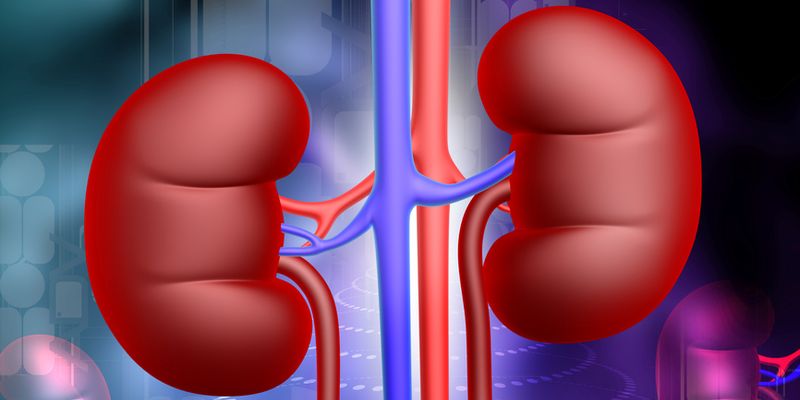
Go to Top
The Yoga Shala Phuket

Digital illustration of 3d rendering human kidneys in color background
The pair of kidneys is located at the back of abdomen and they have a shape of kidney beans. Each kidney contains approximately one million particles called nephrones. These nephrons are responsible for removal of any unwanted toxins from our body. So its really important to know what is damaging our kidneys so we could prevent the negative effects and keep our kidneys healthy:
1. Too much alcohol consumption. 
The toxins found is alcohol damage not only our liver but also kidneys. Drinking alcohol without limitation may cause the deposition of uric acid in renal tubules, causing tubular obstruction and increasing risks of kidney failure.
2. Too much meat and protein.
The by product of protein digestion is ammonia – a toxin kidneys need to neutralize. More protein means more effort for the kidneys, which can, over time, lead to decreased function. Eating too much meat and protein can increase the metabolic load of the kidney. For those suffering from proteinuria, meat consumption too may aggravate protein leakage, worsening renal pathological lesion.
3. Consuming too much caffeine.
We consume more caffeine than we think we do. Many drinks and sodas contain caffeine so, before we know it, the blood pressure goes up. Also caffeine has an diuretic action which lead to dehydration and it puts a pressure on the kidneys.
4. Not sleeping enough.

Not sleeping enough leads to blood pressure increasing. Chronically elevated blood pressure can cause damage to kidney capillaries giving rise to kidney problems.
5. Consuming too much salt.
95% sodium we consume through food is metabolized by the kidneys. Exceeding the salt intake will make the kidneys work harder to excrete the excess salt and can lead to decreased kidney function. This excess sodiu will cause water retention, causing edema. Edema usually elevates blood pressure and increases the risk of developing kidney disease.
6. Not drinking enough water.
Our kidneys need to get properly hydrated to perform their functions. If we don’t drink enough, the toxins can start accumulating in the blood, as there isn’t enough fluid to drain them through the kidneys.
7. Not emptying the bladder in time.
Maintaining a full bladder for a long time is a quick way of causing bladder damage. That the urine stays in the bladder for a long time can cause the bacteria breeding in urine to multiply quickly. Once the urine refluxes back to ureter and kidneys, the bacteria can result in kidney infections, then urinary tract infection, and then nephritis, even Uremia.
8. Smoking.
Smoking has been linked to atherosclerosis. The narrowing and hardening of blood vessels affects the blood supply to all vital organs, including the kidneys.
9. Lack of exercise.
Regular exercises decrease the rick of developing kidney stones. Generally speaking, maintaining a healthy weight will reduce your chances of kidney stones.
10. Vitamin B6 deficiency.
A healthy diet is important for good kidney function. Vitamin B6 deficiency increases the risk of kidney stones. For optimal kidney function, we should consume at least 1.3 milligrams of vitamin B6 daily. The richest sources of this vitamin include chickpeas, potatoes and starchy vegetables, and non-citrus fruits.
Our kidneys are an amazing organ. They produce hormones, filter blood, absorb minerals, produce urine and maintain a healthy acid-alkaline balance. There is no life without the kidneys. Looking after your kidneys goes hand in hand with looking after your health and well-being.
The subtle energy of your food becomes your mind
Skip to content Go to Top
The Yoga Shala Phuket
 Dear yoga practitioners,
There is a very illustrative story we found and wanted to share with you (below). The message here is that we are very effected by food we take. We may not notice that and not feel it so much, but if we wish to purify our body and mind and progress on the path we need to be more aware of what are we eating.
Every product we consume has not only nutritional qualities but also a subtle vibration so it is tremendously important for both our physical and mental health that we consume healthy, energy giving food that has a pure, positive vibration. And may be before we eat we should find out where the food has come from and what qualities it contains as it has a marked effect on the body, mind and our spiritual energy. These vibrations can considerably alter our physical well-being, our thoughts, feelings and vitality. It very easy to understand about food when we ask ourselves a simple basic question: “Is the food I am eating connected with the pain, suffering or death of any living being?”
Daily, hundreds of thousands of animals are cruelly slaughtered for consumption. Apart from the fact that meat is detrimental for our physical health it is extremely harmful for our consciousness and has serious karmic consequences. If we are taking a yoga path we need to realize about the karmic consequences of killing animals, and also the danger to their health caused by the consumption of meat (a fact which nowadays is undeniable, with the spreading of animal diseases such as BSE, Foot and Mouth Disease, Swine Fever, etc., and also the feeding of antibiotics and hormones to animals).
Together with the meat that we consume we absorb the vibration of the fear of death, the pain and the despair of the animal. This fear sinks into the subconscious and comes to light again in our dreams and meditation. How subtly the food works can be seen in the following story:
“A Yogi lived in a little hut outside a village and each day the villagers provided him with a meal. In the village lived a thief who also wanted to gain the blessings of the Yogi, so one day he went and offered the Yogi a meal. But the Yogi refused to accept anything from him. Hurt, the thief left and changed his plan. He then instructed the owner of a café to prepare and deliver a midday meal to the Yogi, for which he paid. The owner carried out the instructions and the Yogi ate the meal not suspecting that the thief had paid for it.
During his evening meditation a very peculiar thought suddenly arose in the mind of the Yogi. He had a compulsive desire to acquire the gold statue of Krishna from the temple. The longing for it was so strong that in the middle of the night he crept into the temple and stole the statue of Lord Krishna. But he was observed by the guard who immediately ran into the village and sounded the alarm.
The Yogi ran as quickly as he could down towards the river with the golden Krishna under his arm. He jumped into the water – and then abruptly stopped. The cold water had brought clarity to his confused thoughts and he became conscious of just what he had done, and of the awkward situation he now found himself in as the villagers approached him shouting angrily.
With great presence of mind the Yogi decided on a ruse. He acted as though he were performing a Pūjā . As his pursuers approached they saw what appeared to be a ritual bathing of the form of Krishna with the Yogi chanting Mantras. This calmed them down and afterwards they returned with the Yogi to re-instal the statue in its rightful place.
It was completely incomprehensible to the Yogi how his mind was able to have become so confused. Then it occurred to him to ask the man who had brought him his last meal. He called him and questioned him about where the food had come from. This person then admitted that the thief was the true donor of the meal. Now the Yogi was clear about where the desire to steal had come from. The vibrations of the thoughts of the thief were in the food and it was in this way that they had been transmitted to him.”
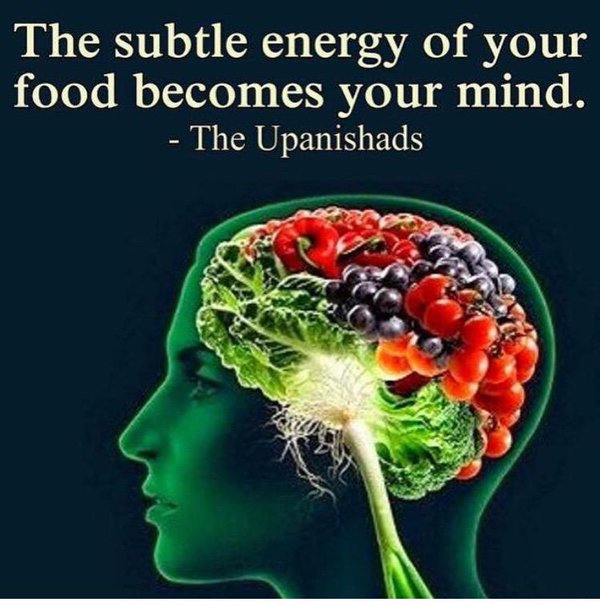
“The subtle energy of your food becomes your mind.” The Upanishads
What do we need to know about drishti
Skip to content Go to Top
The Yoga Shala Phuket
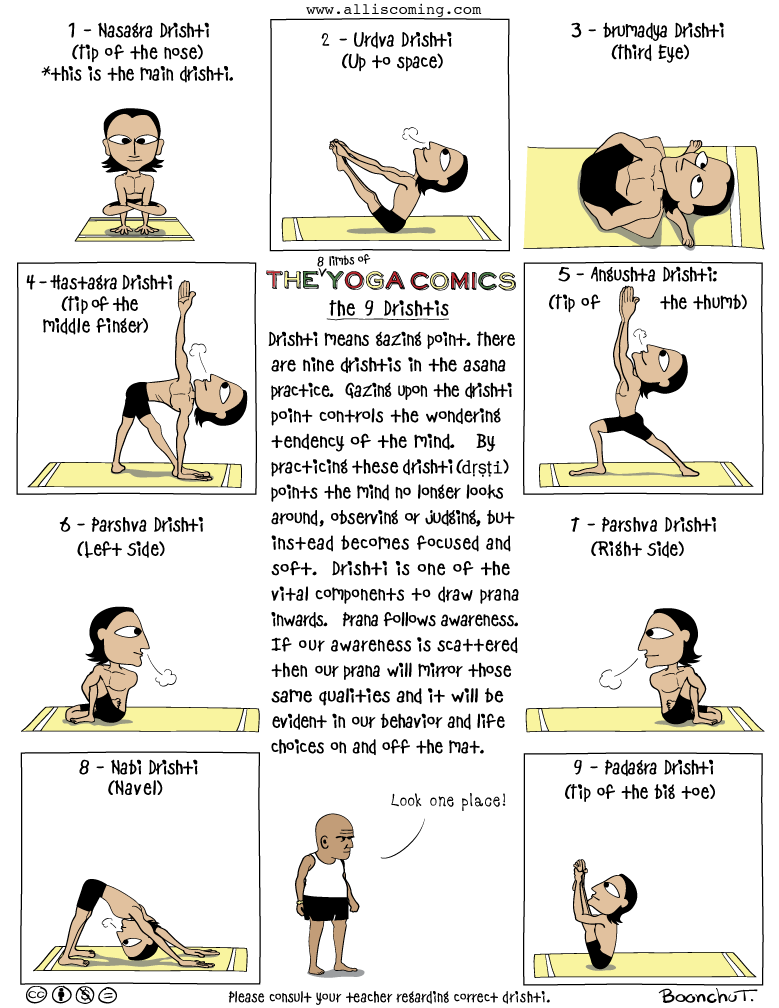 “Drishti means gazing point. Drishti improves concentration and brings about a realization of oneness during the practice. With the gaze focused in one place during our practice, we can be more present in the postures. This focus and awareness can carry over into our daily life.” R. Sharath Jois
When we keep our attention to external things, our vital energy (prana) flows out of us as we scan the stimulating sights. If we allow our eyes to wander we create distractions and it leads us away from yoga. To work out these habits, to control and focus out attention are fundamental principles in yoga practice. By controlling and directing the focus, fist of the eyes and then of the attention, we are using the yogic technique called drishti.
Drishti in Sanskrit means sight, direction or focused gaze, it is a tool used in asana practice to bring us closer to concentration (dharana) and sense withdrawal (pratyahara). Practicing drishti teaches us to control our wandering eyes, limit the intake of external stimuli so we can control the mind.These 3 limbs of Ashtanga Yoga – asana, dharana and pratyahara – along with others of yamas, niyamas, pranayama and dhyana support the ultimate yoga goal of attaining total realization or enlightenment called samadhi.
Apart of limiting visual stimuli and distraction the fixed gaze also enhances our physical practice by preventing and directing our energy, enhancing alignment and even deepens a posture. It is a soft-focus gaze, not a piercing stare with possibly blurred eyes. External data intake such as what others are doing or at some places even reflection in the mirror is replaced by internal reflection.
Practically speaking, drishti is important tool for maintaining the balance during asana practice. Balance of the body is a reflection of the state of mind and if the mind is agitated we can not find a balance in a physical posture. The mind directs the body and it also directs the eyes to gaze towards the points of most salient interest. A gaze directed at one of the drishties instills a deep inner practice. Only a calm, clear mind can strip away the layers of ego, old habit patterns, and ignorance to reveal the brilliant light of consciousness.
In Ashtanga Yoga, each pose has a specific gazing point. There are 9 points or drishties:
Nasagrai drishti (tip of the nose)
Broomadhya drishti (between the eyebrows)
Angustha ma dyai drishti (towards thumb)
Nabi chakra drishti (navel)
Urdhva or antara drishti (gazing upward)
Padhayoragrai drishti (toes)
Hastagrai drishti (fingers)
Parsva drishti (gazing to the left or right)
In the beginning if one finds difficult to keep different drishties at different postures, it is possible to keep the gazing point to the tip of the nose.
They eye should always be open and the eyes have to be closed only at the final relaxation posture called Sukhasana (sometimes called Savasana). Sri K. Pattabhi Jois would often joke that if we close the eyes during asana practice, sleep would come soon. Without the specific points of attention, asana practice would lose some of its intensity and not be as successful at effecting the kind of spiritual transformation that is its ultimate goal.
In the beginning students learn to keep the gaze at one point and further with the practice they come to develop single point attention which demands from practitioner a strong, steady mind. A common definition of yoga is the ability to maintain a singular point of attention and the evidence of trained mind is the sustained concentration on a certain point with unwavering focus.
But the full meaning of drishti isn’t limited to its value in asana. In Sanskrit, drishti can also mean a vision, a point of view, or intelligence and wisdom. The use of drishti in asana serves both as a training technique and as a metaphor for focusing consciousness toward a vision of oneness. Drishti organizes our perceptual apparatus to recognize and overcome the limits of “normal” vision.
Our eyes usually can only see objects in front of us that reflect the visible spectrum of light, but yogis seek to view an inner reality not normally visible. We become aware of how our brains only let us see what we want to see – a projection of our own limited ideas. We have a conditioned mind and often our opinions, prejudices, and habits prevent us from seeing unity. Drishti is a technique for looking for the Divine everywhere – and thus for seeing world around us as it is. Used in this way, drishti becomes a technique for removing the ignorance that obscures this true vision, a technique that allows us to see Divine in everything.
The ultimate goal of yoga practice is the single pointed revelation of the Divine within. The practice of drishti allows students to develop spiritual paradigm which leads to wisdom – light that dispels the darkness of ignorance and develops brilliant inner light. This inner light produces clarity, perception, and vision so the true power of drishti is revealed.
YOGI FOODS TO ENJOY

Ashtanga toe
Skip to content Go to Top
The Yoga Shala Phuket
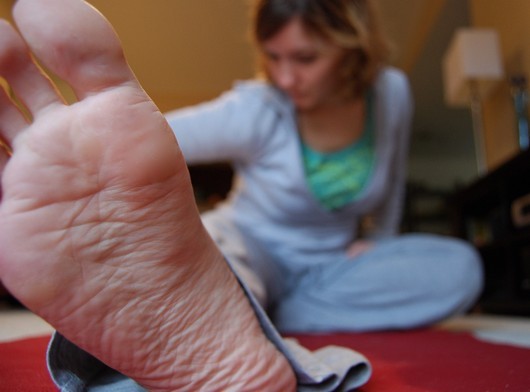 Many ashtangis all over the world have caught a toe at least once. When the skin is peeling back on the big toe it is called Ashtanga toe. It may happen due to intensive jumping back when the force and friction from landing in chaturanga dandasana repeatedly or just from propelling yourself forward while walking barefoot peels the skin off the big toe. But lets try to see the other reasons cause this phenomena named Ashtanga toe as the outside of the body is a reflection of the inside.
And when the skin on the big toe is peeling off it shows usually an imbalance in the body’s pH. When the body gets too acidic, skin can become weakened and tear easier than when the body is in a more alkaline state.
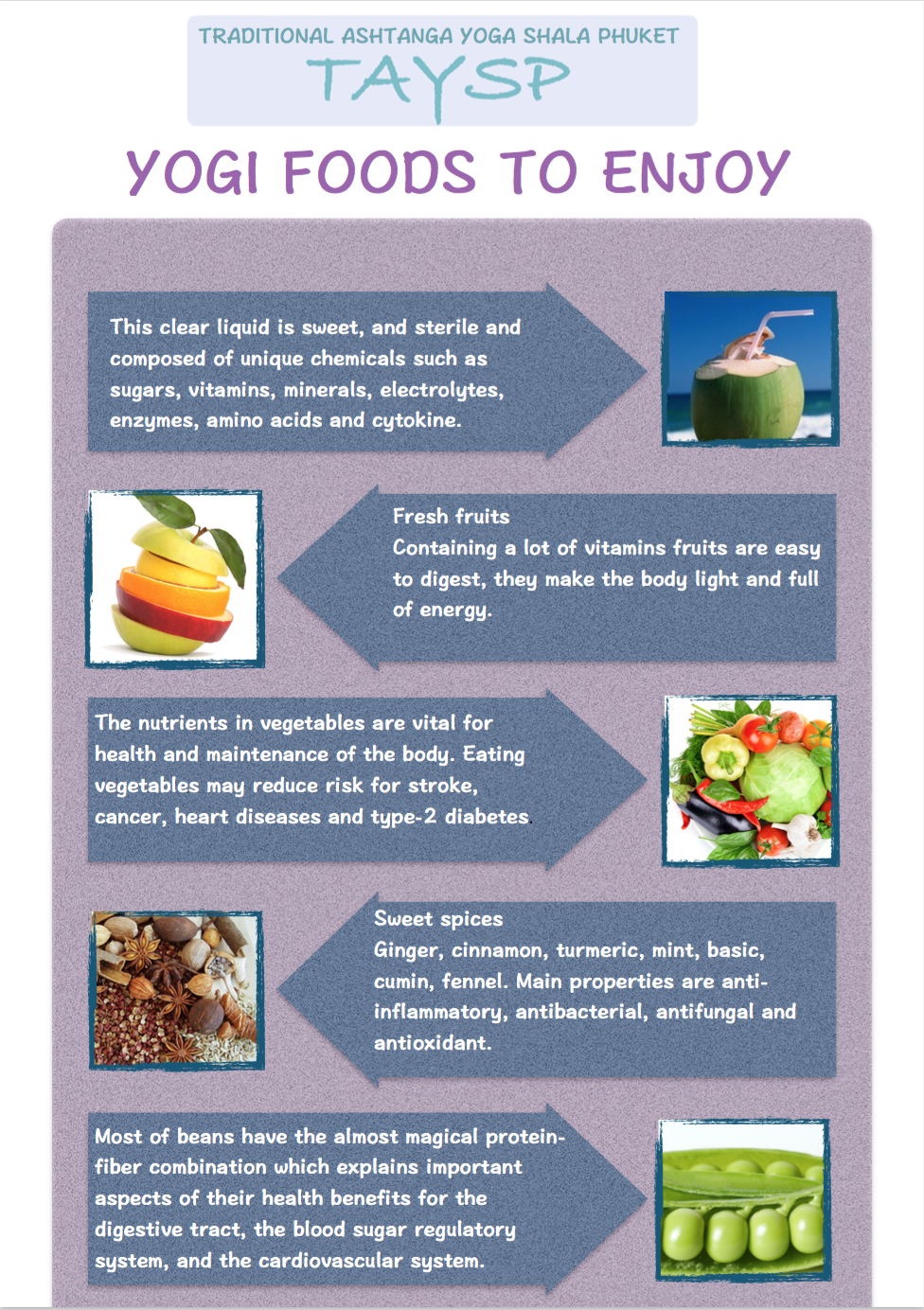
Some Ashtanga practitioners perform intensive daily practice and dont think much about natural supplements they need to take as with a sweat and intensive practice they lose some amount of minerals (apart of toxins). After years of intense Ashtanga practice where one would lose 5 to 10 pounds of sweat in every session, the bones could start to weaken and every tooth in the mouth could be wiggled. If coconut water is available to drink we would highly recommend to consume it daily. The water of the young or green coconut is so well-balanced in electrolytes that it has been used in place of plasma when plasma is in shortage. This “magic” water remineralize the body after profuse sweating. If coconut water is not available its possible to make our own electrolyte: ginger, lemon, organic raw honey and Himalayan salt.
Coming back to the topic, Ashtanga toe. The temporary fix is a band aid, but as always band aids of any type are only short term solutions. The real fix is a dietary change to a more alkaline diet. There is a lot of information in the internet about alkaline diets but the basics are more fruits and vegetables and less grains, dairy and animal protein. In addition to the need for high enzyme, alkalizing foods, good quality fats are essential. Raw oils are by far the most healthful. Coconut is one of the best foods for anyone. The coconut tree was known to ancient yogis as the tree of life. The oil of the mature coconut has numerous healing properties. Also eating more omega 3s like hemp and flax is advisable. Well balanced vegetarian diet is not only the healthiest for the body but also for the planet.
So if you are new to Ashtanga and start experiencing “Ashtanga toe” dont get confused, use the band first and may be check and change your diet.
Keep practicing,
Namaste!
Rub the sweat during the practice
Skip to content Go to Top
The Yoga Shala Phuket
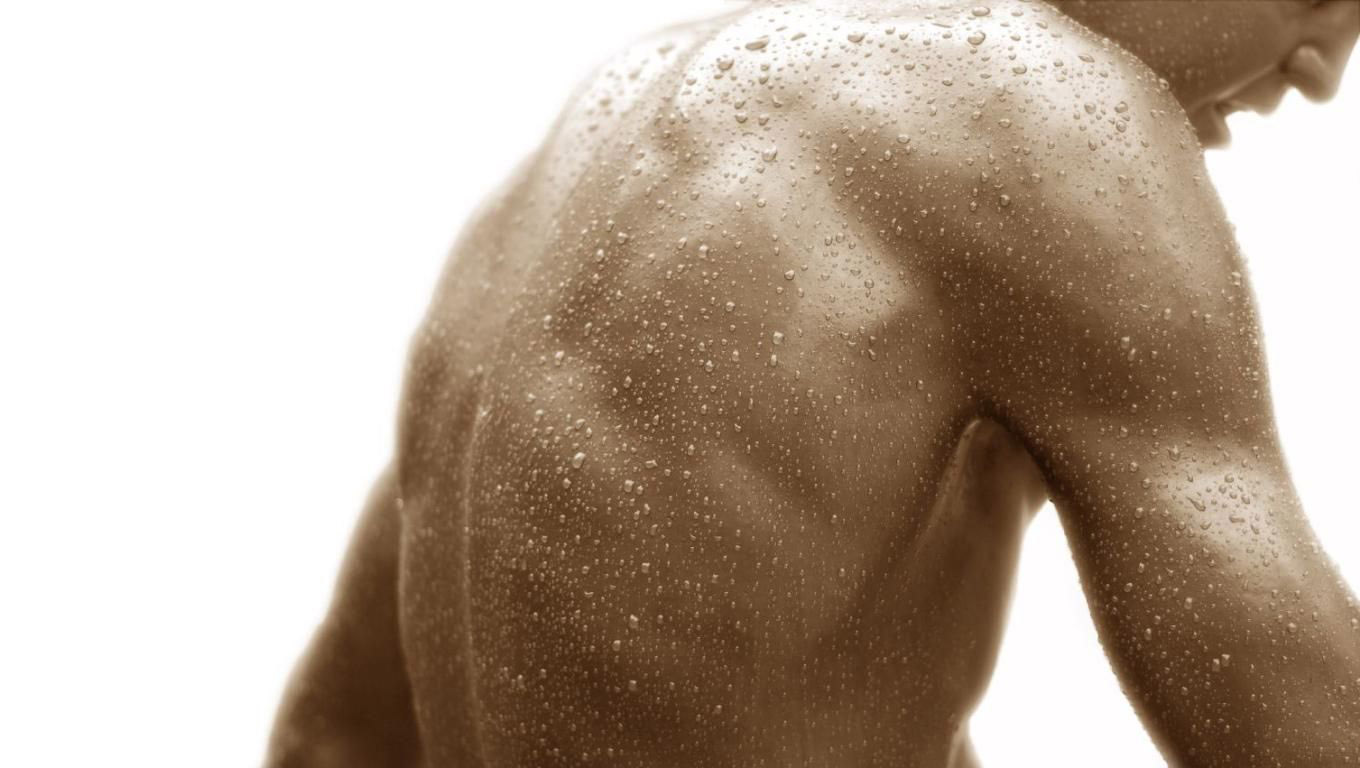
“The perspiration exuding from exertion of practice should be rubbed into the body (and not wiped), as by so doing the body becomes strong.”
Hatha Yoga Pradipika, Chapter 2 verse 13
Sweat is important product of vinyasa (breathing and movement system) and during the practice when we combine asanas with the breath and the movement the blood circulates freely in the entire body washing away pain and disease. S.K. Pattabhi Jois used to say that the blood boils. And when the blood boils all the poisons are burnt. This heated blood moves through internal organs and around the joints and brings out impurities with the sweat.
Sweat is a result of a very powerful detox process which occurs in the body during the practice. And when we rub the sweat back into the body we increase the amount of sweat and we make the detoxification process more effective. When we wipe the sweat during the practice we make our body cooler and more stiff so we prevent a strong purification process.
So during the practice do not wipe your sweat! Rub it back into exposed parts of your skin. Apart of mentioned above its an interesting to mention that since the water has a capacity to carry the energy and memory and if we wipe the sweat we drain the energy we generated during the practice. So if we rub the sweat back we push the energy back. It is also recommended not to take a shower at least 1,5 hours after practice.
May be its the time to develop right habits at your practice, start rubbing the sweat instead of wiping it!
Inspiring quotes from B.K.S. Iyengar
Skip to content Go to Top
The Yoga Shala Phuket
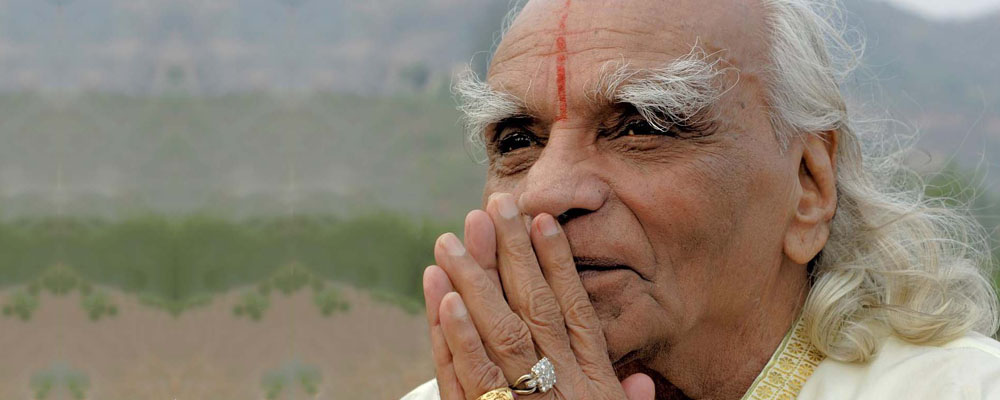 Dear friends! Here are some Inspiring quotes from B.K.S. Iyengar. He founded the style of yoga known as Iyengar Yoga which now benefits millions of practitioners around the globe. He dedicated his life to the yoga practice and to teaching others how to make use of yoga in their lives. Enjoy reading beautiful quotes and may be these words will inspire you in your personal yoga practice.
“My Body Is My Temple And Asanas Are My Prayers”
“Yoga teaches us to cure what need not be endured and endure what cannot be cured.”
“Action is movement with intelligence. The world is filled with movement. What the world needs is more conscious movement, more action.”
“Yoga is like music. The rhythm of the body, the melody of the mind, and the harmony of the soul creates the symphony of life.”
“Yoga does not just change the way we see things, it transforms the person who sees.”
“It is through the alignment of the body that I discovered the alignment of my mind, self, and intelligence.”
“Breath is the king of mind.”
“Yoga allows you to find a new kind of freedom that you may not have known even existed.”
“Yoga allows you to rediscover a sense of wholeness in your life, where you do not feel like you are constantly trying to fit broken pieces together.”
“Yoga is a light, which once lit, will never dim. The better your practice, the brighter the flame.”
“There is no difference in souls, only the ideas about ourselves that we wear.”
“Be inspired but not proud.”
“The hardness of a diamond is part of its usefulness, but its true value is in the light that shines through it.”
Namaste…